
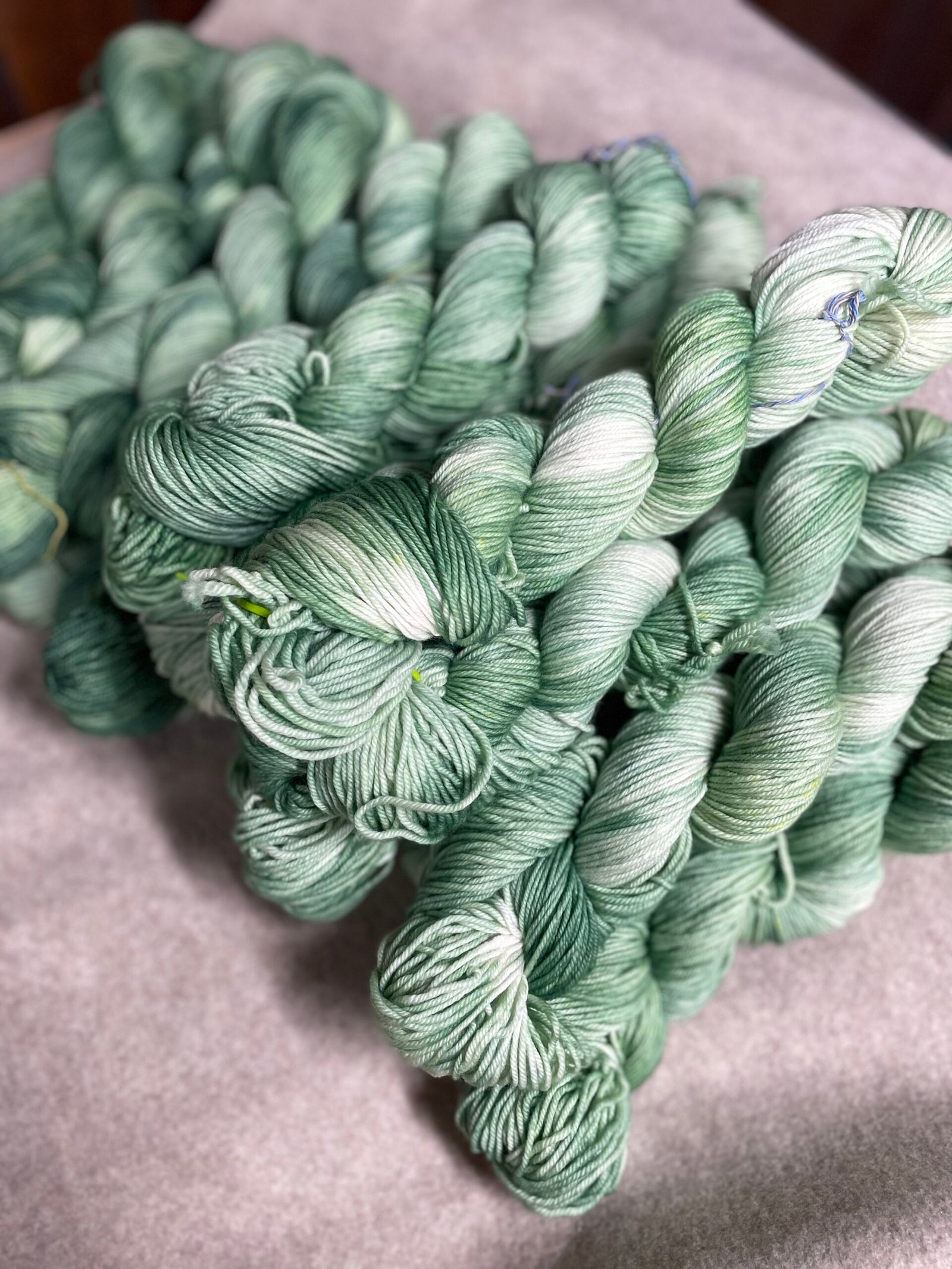
If you have ever held a skein of hand-dyed yarn and thought,
“Why does this feel so special?”
You are not imagining it.
Hand-dyed yarn is different from commercially dyed yarn in ways that go far beyond color. It is about process, personality, and the quiet beauty of variation. Whether you are brand new to fiber arts or have been knitting and crocheting for years, understanding these differences can help you choose yarn with more confidence and joy.
Let’s take a closer look at what makes hand-dyed yarn so unique.
No Two Skeins Are Exactly the Same
 One of the first things you will notice about hand-dyed yarn is variation. Even skeins dyed in the same batch will have small differences in tone, depth, and how the color settles into the fiber.
This happens because hand-dyeing is a small-scale, hands-on process. Dyers layer color by pouring, painting, speckling, or immersing yarn in dye baths. Heat, timing, and fiber content all affect how the yarn absorbs color.
Instead of being a flaw, this variation is part of the beauty. It gives your finished project movement and life. When you alternate skeins in a larger project, those subtle shifts create a fabric that feels rich and organic rather than flat or uniform.
Color Has Depth, Not Just Surface
Commercial yarn is often dyed to achieve a perfectly even, repeatable color. Hand-dyed yarn is usually built in layers.
A single colorway might include:
A soft base tone
One or two deeper shades
Speckles or washes of contrasting color
These layers create depth. When you knit or crochet with hand-dyed yarn, the stitches reveal different tones as they shift and twist. Light catches the fiber in different ways, and the fabric changes slightly depending on how it moves.
That depth is what makes hand-dyed yarn feel expressive. It is not just a color. It is a mood.
The Dyeing Process Is Slower and More Intentional
Hand-dyed yarn is not produced on an assembly line. It is dyed in small batches, often by a single person or a small team.
The process usually includes:
Pre-soaking the yarn so it can absorb dye evenly
Mixing custom color formulas
Applying dye by hand
Heat setting to lock in the color
Rinsing and drying
Twisting and labeling each skein
Each step takes time and attention. The dyer is constantly watching how the color develops and making small adjustments. This slower pace allows for more creativity and nuance, but it also means hand-dyed yarn is more limited and more personal.
When you use it, you are holding the result of someone’s hands, choices, and care.
Fiber and Color Work Together
Hand-dyers often choose their yarn bases carefully because different fibers take dye in different ways.
For example:
Merino wool tends to take color vividly and evenly
Highland wool can produce slightly heathered, rustic tones
Silk blends often add shine and intensify depth
- Superwash wools strike bolder and brighter than non-superwash wools (a quick lesson we learned in our first four colors!)
Because the dyeing process is small-scale, dyers can match color stories to specific bases. A soft, romantic palette might be paired with a silky blend. A woodland-inspired colorway might live on a sturdy wool with a bit more texture.
This relationship between fiber and color gives hand-dyed yarn a personality that is hard to replicate in mass production.
You Are Buying a Story, Not Just Supplies
Hand-dyed yarn often comes with a story behind the color. A season, a landscape, a piece of music, a memory, or a feeling can inspire a colorway.
When you choose hand-dyed yarn, you are not just choosing “blue” or “pink.” You are choosing the way that color makes you feel. You are choosing a small piece of someone else’s creative vision and blending it with your own.
That story can become part of your project. A shawl becomes more than a shawl. A sweater becomes a reminder of a season or a moment in your life.
How to Work With Hand-Dyed Yarn Successfully
Because of the variation and depth in hand-dyed yarn, a few simple tips can help you get the best results:
Alternate skeins in larger projects.
If you are making a sweater or blanket, switch between two skeins every few rows. This helps blend any small differences between skeins.
Embrace movement.
Hand-dyed yarn shines in simple stitch patterns that let the color do the work. Stockinette, garter, and basic crochet stitches often show off the yarn beautifully.
Expect character.
Tiny shifts in tone or occasional pooling are part of the charm. Hand-dyed yarn brings personality to your project.
A Different Kind of Beauty
Hand-dyed yarn is not about perfection in the industrial sense. It is about texture, nuance, and the quiet beauty of things made slowly.
When you choose hand-dyed yarn, you are choosing:
Color with depth
Fiber with character
A process rooted in care
And in the end, you are creating something that could not have existed in exactly the same way with any other skein.
That is what makes it special.
Pink Pearl Yarns
At Pink Pearl Yarns, every colorway begins with a story, a season, a song, or a feeling we want to hold onto a little longer. Each skein is dyed in small batches, with care given not just to the color itself, but to how it will feel in your hands and in your making. Our hope is that when you work with Pink Pearl Yarns, you feel that sense of intention and warmth woven right into your stitches, and that your project carries both your story and ours.
No responses yet